
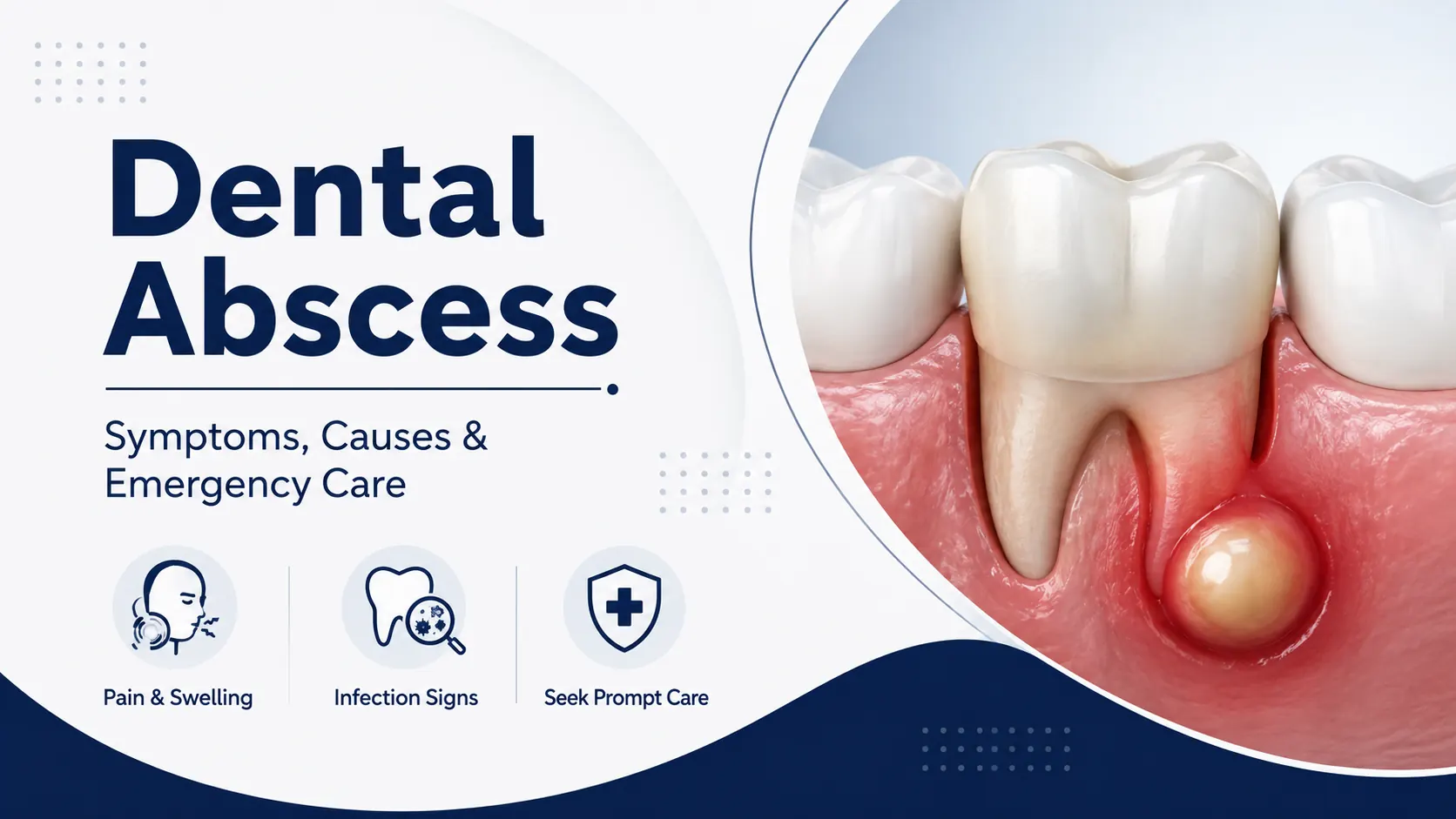
A dental abscess is a collection of pus caused by a bacterial infection in a tooth, the gums or the tissues supporting a tooth. Common dental abscess symptoms include severe toothache, swelling, pain when biting, a bad taste in the mouth and fever.
A suspected abscess needs urgent assessment by a dentist because it will not go away on its own. If you think you have an abscess, contact R&G Dental to arrange a same-day emergency dental appointment.
When is a dental abscess an emergency?
Every suspected dental abscess needs prompt dental assessment. However, the right place to seek help depends on your symptoms.
According to the NHS dental abscess guidance, you should not visit a GP surgery for a dental abscess because a GP cannot provide the dental treatment needed to remove its source.
What is a dental abscess?
A dental abscess forms when bacteria cause an infection and the body produces pus in response. The pus can collect inside a tooth, around the tip of its root or within the gum tissues beside a tooth.
The abscess may appear as a red or swollen area, sometimes with a small pimple-like lump on the gum. However, not every abscess is visible. A dentist may need to examine the tooth and take an X-ray to find the infection and determine its cause.
What are the symptoms of a dental abscess?
Dental abscess symptoms can develop suddenly or become progressively worse. They may include:
- Severe, persistent or throbbing toothache
- Pain that spreads towards the jaw, ear or neck
- Pain or tenderness when biting or chewing
- Sensitivity to hot or cold foods and drinks
- Red, tender or swollen gums
- A pimple-like lump or “gum boil” beside a tooth
- Pus or unpleasant fluid draining from the gum
- A bad taste or smell in the mouth
- Swelling of the cheek, face or jaw
- Difficulty chewing or opening the mouth
- Tender or swollen glands in the neck
- A high temperature or feeling generally unwell
- A tooth that feels loose or raised when biting
You do not need to have every symptom. Some people mainly notice swelling, pressure or discomfort when biting, while others experience intense tooth pain.
Can you have a dental abscess without pain?
Yes. Although toothache is common, a dental abscess is not always painful.
Pain may temporarily decrease if:
- The infected nerve inside the tooth dies
- The abscess begins draining through the gum
- Pressure inside the infected area reduces
- Painkillers temporarily control the symptoms
A painless gum boil, swelling or draining area can still indicate an active infection. The disappearance of pain does not prove that the infection has healed.
What are the different types of dental abscess?
The type of abscess depends on where the infection begins.
What causes a dental abscess?
A dental abscess develops when bacteria enter tissue where they can cause infection. Common causes include:
- Untreated tooth decay: Decay can pass through the hard outer layers of a tooth and reach the dental pulp, the soft inner tissue containing nerves and blood vessels. Infection can then travel through the root canal and form an abscess around the root tip.
- A cracked, chipped or broken tooth: A crack or break can create an opening through which bacteria reach the inside of the tooth. Even a small crack may cause infection if it extends into the pulp.
- Gum disease: Advanced gum disease can create deeper spaces between a tooth and the surrounding gum. Bacteria and debris may collect in these areas and cause a periodontal abscess.
- Dental injury: Trauma can damage the blood supply or nerve inside a tooth, even if the tooth does not appear broken. The damaged pulp may later become infected.
- An impacted or partially erupted tooth: A tooth that has not fully emerged through the gum can trap bacteria and food debris. This is particularly common around partially erupted wisdom teeth.
- Problems around previous dental work: Decay, cracks or leakage around an existing filling or crown can sometimes allow bacteria to reach the inside of a tooth.
What happens if a dental abscess bursts?
If an abscess bursts, you may notice a sudden unpleasant or salty taste as fluid drains into your mouth. The pressure and pain may temporarily decrease.
This does not mean the infection has gone. Its source may remain inside the tooth or gum, allowing the abscess to refill or the infection to spread. Rinse your mouth gently, avoid squeezing the area and contact a dentist urgently.
How is a dental abscess diagnosed?
Your dentist will ask about your symptoms and medical history before examining the affected tooth, gums and surrounding tissues.
The assessment may include:
- Checking for redness, swelling, drainage or a gum boil
- Gently tapping or applying pressure to the suspected tooth
- Testing how the tooth responds to temperature or other stimuli
- Assessing the gums and stability of the tooth
- Taking a dental X-ray when clinically appropriate
An X-ray can help identify infection around a tooth root, assess the surrounding bone and guide the most appropriate treatment.
How does a dentist treat a dental abscess?
Treatment aims to drain the pus, relieve pressure and remove the source of infection. The appropriate option depends on where the abscess started and whether the tooth can be restored.
- Draining the abscess
Your dentist may drain the infection through the tooth, through an existing gum pocket or through a small incision in the swollen tissue. Drainage helps relieve pressure, but further treatment is usually needed to prevent the infection from returning.
- Root canal treatment
If the infection began inside a tooth that can be saved, root canal treatment may be recommended. The infected pulp is removed, the root canals are cleaned and disinfected, and the tooth is sealed.
A crown may later be recommended if the remaining tooth requires additional protection.
- Gum treatment
A periodontal abscess may require drainage and careful cleaning below the gum line. Further gum treatment or a periodontal assessment may be needed to manage the underlying gum disease and reduce the risk of recurrence.
- Tooth extraction
If a tooth is too damaged to restore, tooth extraction may be necessary to remove the source of infection. Your dentist will explain why removal is recommended and discuss any appropriate options for replacing the tooth after healing.
What happens if a dental abscess is left untreated?
A dental abscess does not have a reliable or safe period during which it can be left untreated. The infection may remain localised for a time or spread more quickly; it is not possible to predict the course based on pain alone.
Without treatment, it may lead to:
- Increasing pain and swelling
- Damage to the surrounding gum and bone
- Loss of the affected tooth
- Infection spreading into the face or neck
- Difficulty breathing or swallowing if deeper tissues become affected
- In rare cases, sepsis—a life-threatening reaction to an infection
A prolonged high temperature does not cause sepsis, but it may indicate that the infection is spreading. Seek urgent medical help if a dental infection is accompanied by a persistent fever or if you feel seriously unwell. Learn more about the warning signs in the NHS sepsis guidance.
Get urgent dental care in Didsbury
If you have toothache, a gum boil, facial swelling, pus or other possible dental abscess symptoms, contact R&G Dental as soon as possible.
We offer same-day emergency appointments whenever availability allows. An emergency assessment can identify the source of your symptoms, relieve pain and determine whether you need drainage, root canal treatment, gum treatment or extraction.
Frequently asked questions about Abscess
Can a dental abscess go away on its own?
No. Pain and swelling may temporarily improve if the abscess drains or the tooth nerve dies, but the source of infection can remain. A dental abscess requires professional assessment and treatment.
Is a dental abscess always painful?
No. Some abscesses cause swelling or a gum boil with little pain. Pain can also stop if the nerve inside the tooth dies or the abscess starts draining. Painless swelling still needs dental assessment.
How do I know if a tooth infection is spreading?
Possible warning signs include increasing facial or neck swelling, fever, swollen glands, feeling increasingly unwell, difficulty opening the mouth or problems breathing, speaking or swallowing. Seek immediate medical help for airway, eye or extensive mouth-swelling symptoms.
Will an abscessed tooth need to be removed?
Not always. Root canal treatment may save a restorable tooth, while gum treatment may manage a periodontal abscess. Extraction is generally considered when the tooth cannot be predictably restored. Your dentist will assess the tooth before recommending treatment.
What should you do if you think you have a dental abscess?
Contact a dentist urgently and explain your symptoms, including any pain, swelling, fever or difficulty opening your mouth. While waiting, suitable pain relief, soft foods and a gentle warm salt-water rinse may help temporarily. Follow the NHS dental abscess guidance if symptoms become severe or you cannot obtain an urgent appointment.
Will antibiotics cure a dental abscess?
Antibiotics alone may not cure a dental abscess because they do not remove the infected tooth tissue or other underlying cause. According to SDCEP dental prescribing guidance, antibiotics are generally used when an infection is spreading or causing systemic illness. Drainage, root canal treatment, gum treatment or extraction may still be necessary.
What happens after dental abscess treatment?
Pain and pressure may begin to improve after the infection has been drained and its cause treated, although some tenderness can remain for several days. Follow your dentist’s instructions, take prescribed medicines correctly and attend any recommended follow-up treatment. Contact your dentist if the pain or swelling increases, you develop a fever or your symptoms do not improve as expected.
How can dental abscesses be prevented?
Brush twice daily with fluoride toothpaste, clean between your teeth every day and limit frequent sugary foods and drinks. Regular dental examinations allow decay, cracked teeth and gum disease to be identified and treated before a deeper infection develops. The NHS dental abscess guidance provides further advice on reducing the risk of dental infections.
Key takeaways
- A dental abscess is a bacterial infection that produces a collection of pus.
- Common symptoms include throbbing toothache, gum or facial swelling, pain when biting, pus, bad taste and fever.
- Every suspected abscess needs urgent dental assessment.
- Contact your Dentist for breathing, swallowing, speaking, eye or extensive mouth-swelling symptoms.
- Pain stopping or an abscess bursting does not mean the infection has healed.
- Antibiotics are not always needed and may not remove the underlying cause.
- Treatment may involve drainage, root canal treatment, gum treatment or extraction.