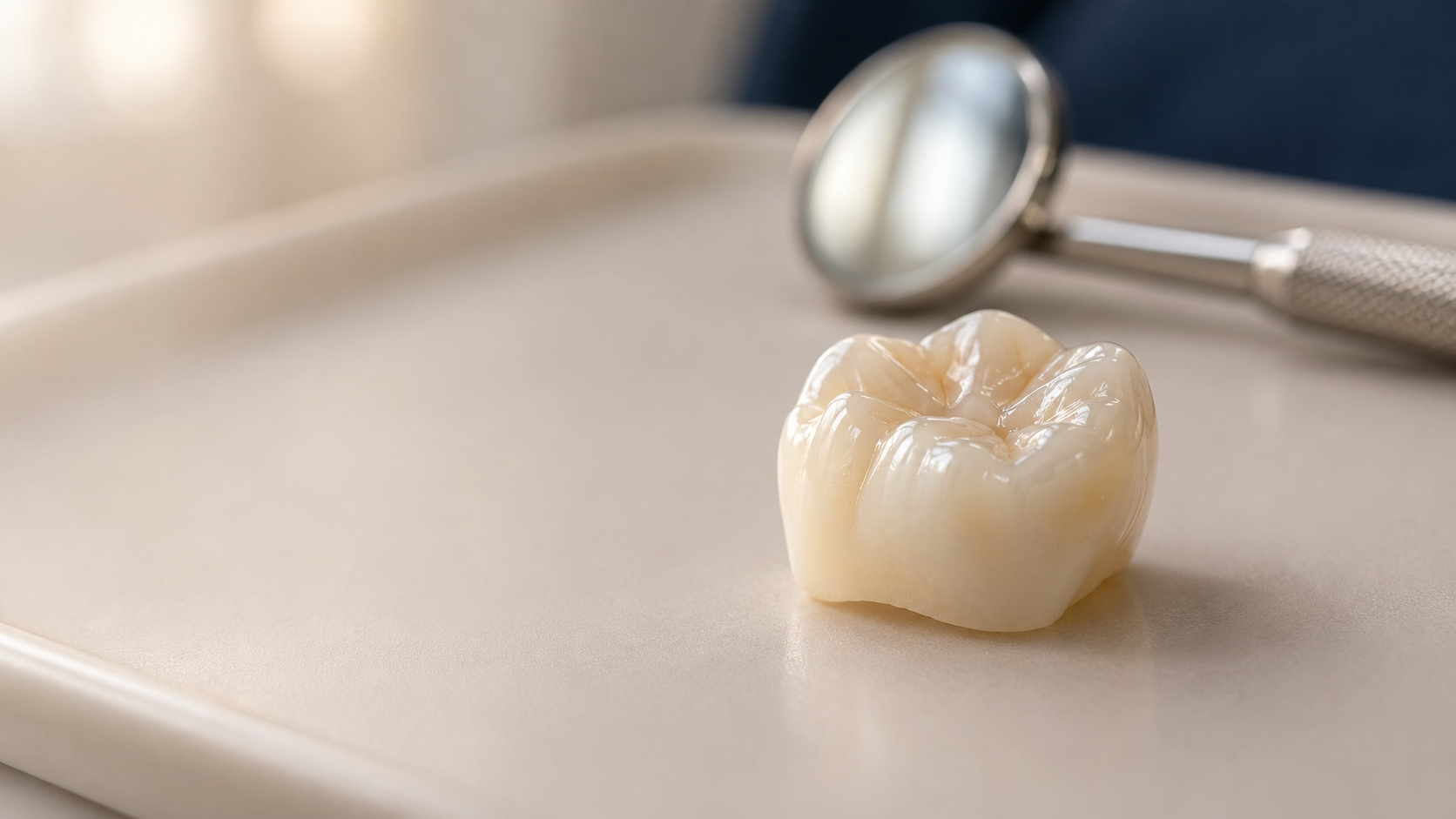
A broken, weakened or heavily filled tooth can make everyday activities such as eating and smiling uncomfortable. A custom-made dental crown can help restore your tooth's shape, protect its remaining structure and improve its appearance.
At R&G Dental in Didsbury, we provide private dental crowns using a choice of materials, including zirconia, E.max porcelain, metal and gold. Each crown is planned around your tooth, your bite and your individual treatment needs.
Whether you live in Didsbury or are travelling from elsewhere in Manchester, our dental team can assess your tooth, explain the available options and help you make an informed decision.




A dental crown, sometimes called a tooth cap, is a custom-made restoration that fits over a prepared tooth. It covers the visible part of the tooth above the gumline, helping restore its shape, function, strength and appearance.
Crowns are commonly recommended when a tooth has lost a significant amount of its natural structure due to decay, fracture, wear or a large existing filling.
Unlike a standard filling, which replaces a damaged portion of a tooth, a crown covers the prepared tooth more extensively. This may provide additional protection where there is insufficient healthy tooth structure for a simpler restoration.
Dental crowns can be made from ceramic, zirconia, metal or combinations of materials. The most suitable option depends on the tooth's condition, its position in your mouth, your bite and your aesthetic preferences.
A crown restores an existing tooth, it does not replace a missing tooth root. If a tooth is missing, alternatives such as dental implants or bridges may be more appropriate.
At R&G Dental, we assess the remaining tooth structure before recommending a crown, helping ensure the proposed treatment is suitable for your dental health.
When Might You Need a Dental Crown?
A dental crown may be recommended when a tooth is too damaged or weakened to be reliably restored with a conventional filling. The aim is to preserve a suitable natural tooth while restoring comfortable function and appearance.
Broken or Severely Damaged Teeth
When a substantial part of a tooth breaks, there may not be enough healthy structure remaining for a filling alone. A crown can rebuild the visible portion of a restorable tooth and help protect it during everyday use.
Cracked or Weakened Teeth
A crack can affect how pressure is distributed through a tooth, sometimes causing discomfort when biting. Depending on the crack's location and severity, a crown may help protect the tooth from further damage. Not all cracked teeth can be saved with a crown. Some require additional treatment, while others may not be restorable.
Teeth with Large Existing Fillings
A large filling can leave the remaining natural tooth walls relatively thin. If those walls are at risk of breaking, a crown or another protective restoration may be considered. Smaller areas of damage may still be suitable for dental fillings.
Teeth After Root Canal Treatment
Some teeth become more vulnerable to fracture because of the amount of tooth structure lost before or during treatment. Following root canal treatment, a crown may be recommended to protect a back tooth or another significantly weakened tooth. Not every root-canal treated tooth requires one.
Heavily Worn or Misshapen Teeth
Extensive wear, fractures or changes in tooth shape can affect chewing and appearance. A crown may be considered where a more substantial restoration is necessary. For teeth with mainly cosmetic concerns and relatively healthy structure, less invasive options may be more suitable.
Not Sure If You Need a Dental Crown?
Our dentists can assess your tooth and help you decide whether a crown, filling, onlay or another treatment is right for you.
Types of Dental Crowns Available at R&G Dental
Dental crowns are not all made from the same material. Some are particularly valued for their natural appearance, while others are selected for durability or their suitability for teeth exposed to greater biting forces.
How Is a Dental Crown Fitted?
Dental crown treatment usually involves an assessment, preparation of the tooth and fitting of the finished restoration. Conventional laboratory-made crowns commonly require two treatment visits after any necessary preliminary care. The exact process depends on your tooth and the type of crown being made.
Consultation and Dental Assessment
Your dentist examines the tooth, checks the surrounding gums and assesses your bite. X-rays may be recommended where clinically necessary. This helps determine whether the tooth is suitable for a crown or whether another treatment would be preferable. You can discuss appearance, material options, likely costs and any concerns about the procedure before deciding how to proceed.
Preparing the Tooth
If a crown is suitable, the tooth is carefully shaped to create enough space for the restoration. Local anaesthetic is normally used where required to help keep you comfortable. Any necessary rebuilding of the supporting tooth is carried out as part of the agreed treatment plan. Your dentist then takes impressions or scans to record the prepared tooth and its relationship with the surrounding teeth.
Protecting the Tooth with a Temporary Crown
Where a laboratory-made crown is being prepared, a temporary crown is generally fitted during the preparation appointment. This protects the tooth and helps maintain its appearance and function while the permanent crown is made. Temporary crowns are not as durable as permanent restorations, so you may be advised to avoid particularly hard or sticky foods.
Fitting Your Permanent Dental Crown
At your fitting appointment, the temporary crown is removed and the finished restoration is assessed. Your dentist checks its fit, bite and, where applicable, colour and appearance before securing it to the prepared tooth. Minor bite adjustments may be necessary to ensure the crown feels comfortable. Once fitted, you will receive guidance on eating, cleaning and looking after your restoration.
How Much Do Dental Crowns Cost in Manchester?
Dental Crowns for Front and Back Teeth
The position of a tooth affects how a dental crown is designed. Front teeth are more visible when you smile and speak, while back teeth generally experience greater forces during chewing.
Dental Crown vs Filling, Onlay or Veneer
Trusted by Patients in Manchester
Restore Your Tooth with a Dental Crown at R&G Dental
A damaged or weakened tooth deserves careful assessment before further problems develop. Whether you need to protect a heavily filled tooth, restore a broken tooth or replace an existing crown, our team can help you understand the available treatment options. At R&G Dental in West Didsbury, we welcome patients from across Manchester who are considering private dental crown treatment. Book an assessment to find out whether a dental crown is suitable for your tooth and discuss your material options and costs.
Dental Crown FAQs - Your Questions Answered
If you're considering a dental crown in Manchester, you may have questions about pain, costs, materials, fitting appointments or how to care for your new restoration.
How much does a dental crown cost in Manchester?
Private dental crowns at R&G Dental currently start from £750 for a full metal or porcelain-fused-to-metal crown. Published prices for monolithic zirconia and E.max crowns start from £850, layered zirconia from £950 and gold crowns from £1,200.
The final cost depends on the chosen material and whether your tooth requires any additional treatment. Our private dental fee schedule lists the practice's published treatment charges.
Does getting a dental crown hurt?
Dental crown preparation is usually carried out with local anaesthetic where required, so you should not experience sharp pain during the procedure. You may notice pressure or vibration, and some temporary sensitivity afterwards is possible. If you are anxious about dental treatment, tell your dentist before the appointment. They can explain each stage, discuss how your comfort will be managed and give you opportunities to take breaks. Pain that becomes severe, persists or worsens after treatment should be assessed rather than ignored.
Do I really need a crown if my tooth is broken but doesn't hurt?
Not necessarily, but a lack of pain does not mean a broken tooth is safe to leave untreated. A fracture can weaken the remaining tooth, expose vulnerable areas or affect how pressure is distributed when you bite. A small chip may be repairable with a filling or bonding, whereas more extensive damage may need a crown. Some fractures can make a tooth unsuitable for restoration.
Our guide to broken or cracked teeth explains how to protect the tooth while arranging an assessment.
Do I need a dental crown after root canal treatment?
Not every tooth needs a crown after root canal treatment, but many back teeth benefit from a protective restoration, particularly if substantial tooth structure has been lost. The decision depends on the tooth's location, remaining strength, previous fillings and biting forces. A crown can help restore a suitable weakened tooth after treatment, but it cannot guarantee the tooth will never fracture.
Our root canal treatment page explains how infected teeth are treated and why a final restoration is important.
How many appointments will I need for a dental crown?
Conventional laboratory-made crowns generally require at least two treatment appointments: one to prepare the tooth and another to fit the finished crown.
An additional assessment or preliminary treatment may be needed, depending on the condition of your tooth.
The University of Bristol's dental crown patient information describes the typical laboratory-made crown process, including temporary restorations between appointments.
If you are travelling from another part of Manchester, ask our team about the proposed appointment schedule before visiting.
Is a zirconia crown better than an E.max porcelain crown?
Neither material is universally better.
Zirconia is often selected when high strength and durability are important, while E.max is valued for its natural-looking translucency and aesthetic characteristics.
However, different zirconia formulations have different properties, and the best choice depends on the tooth's position, remaining structure, available space and bite.
A front tooth requiring close colour matching may have different treatment requirements from a heavily restored molar.
Your dentist should explain the advantages and limitations of the suitable materials before you make a decision.
Will my front tooth crown look like a real tooth?
A well-designed tooth-coloured crown can be made to resemble the shape, colour and surface characteristics of neighbouring teeth.
However, the final appearance depends on factors such as crown material, the underlying tooth colour, gum position and the surrounding teeth.
For highly visible teeth, shade selection and crown design are especially important.
If your concern is mainly cosmetic rather than structural, your dentist may also discuss porcelain veneers or other suitable alternatives.
Can I eat normally after getting a dental crown?
Most patients can return to eating normally once their permanent crown is fitted and the dentist confirms it is suitable to use.
Follow the advice given about when to eat after your appointment, especially if local anaesthetic was used or the crown was recently cemented.
Initially, avoid foods that cause discomfort and be cautious with very hard or sticky items.
If you have a temporary crown, extra care is needed because it is generally less securely retained and less durable than the final restoration.
What happens if my dental crown feels too high when I bite?
A new crown should feel reasonably comfortable when your teeth come together.
If it contacts the opposite tooth before your other teeth meet, feels unusually high or causes persistent pain when chewing, it may need a bite adjustment.
Do not try to file or alter the crown yourself. Contact R&G Dental so a dentist can assess the bite, crown fit and supporting tooth. Early review may help prevent continued discomfort.
Why is my tooth sensitive after having a crown fitted?
Mild sensitivity following tooth preparation or crown fitting can occur, particularly when a tooth still has a living nerve.
However, persistent, worsening or spontaneous pain can indicate that further assessment is needed. Causes may include bite interference, inflammation of the dental nerve, decay or another problem. The NHS guidance on toothache identifies persistent pain, pain when biting and swelling as reasons to seek dental advice.
If you experience increasing pain or symptoms that concern you, arrange a dental assessment rather than assuming they are a normal part of recovery.
Can a tooth still decay underneath a dental crown?
Yes. Although the crown itself cannot develop tooth decay, the natural tooth underneath remains vulnerable.
Decay can develop near the crown margin if plaque accumulates or the restoration no longer seals adequately.
Brush around the gumline, clean between your teeth and keep up with regular dental examinations. The NHS recommends brushing twice daily with fluoride toothpaste and cleaning between your teeth to reduce the risk of tooth decay and gum problems.
What should I do if my dental crown falls out?
Keep the crown somewhere safe and contact a dentist for advice. Avoid chewing on the affected tooth, especially if it feels sensitive or weakened.
Do not use superglue or force the crown back into place.
A dentist needs to check the underlying tooth and determine whether the original crown can be reattached or whether further treatment is necessary.
Our lost filling or crown guide explains the immediate steps to take. If you have significant pain or other urgent symptoms, contact our emergency dental team.
Can a loose dental crown be recemented, or will I need a new one?
Sometimes a loose crown can be recemented if the restoration is intact, the underlying tooth remains suitable and the fit is satisfactory.
However, if the crown is damaged, there is decay underneath or the supporting tooth has fractured, a replacement or additional treatment may be needed.
Do not assume that a loose crown only needs adhesive.
If your crown becomes loose, arrange an assessment. Our emergency dental service in Manchester can help patients who need urgent attention for a lost or damaged restoration.
How long do dental crowns last before they need replacing?
There is no fixed lifespan for a dental crown.
Some crowns remain functional for many years, while others require repair or replacement sooner because of fracture, decay, gum changes, grinding or deterioration of the supporting tooth. Good oral hygiene, suitable material selection and regular dental monitoring can contribute to longevity.
Your dentist can check the condition of existing crowns during routine dental examinations and advise whether they need attention.
Can I get a dental crown if I grind my teeth at night?
Possibly, but tooth grinding or clenching can place significant pressure on natural teeth and crowns. Your dentist will need to assess your bite, the extent of wear and the material options suitable for your situation.
In some cases, a protective night guard may be recommended to help manage excessive forces on the restoration. A crown material that is appropriate for one patient may not be suitable for another with different grinding habits or bite conditions.
Discuss any history of broken crowns, worn teeth or jaw discomfort before treatment.
Why are my gums bleeding or sore around an existing crown?
Bleeding or soreness around a crown can be associated with plaque accumulation, gum inflammation, an overhanging or poorly fitting margin, or another local problem.
A crown does not prevent gum disease, and the surrounding tissues still require careful cleaning.
Do not stop cleaning the area completely because the gums bleed. Instead, arrange a dental assessment to establish the cause and receive appropriate advice.
Our dental hygiene treatments support ongoing cleaning and gum care. If swelling is spreading or you also have severe pain or fever, seek urgent dental advice.
Can I whiten my teeth after getting a dental crown?
Professional tooth whitening can lighten natural teeth, but it does not whiten existing crowns in the same way.
If you whiten your surrounding teeth after a crown has been made, the difference in shade may become more noticeable. For this reason, patients considering both treatments should discuss the order of treatment before having a new visible crown made.
Our professional teeth whitening service can be discussed as part of a wider smile treatment plan where clinically suitable.
What if my tooth is too damaged for a crown?
A crown needs adequate, healthy supporting tooth structure and suitable surrounding tissues. If a tooth has a deep fracture, extensive decay below the gumline or cannot be restored predictably, your dentist may recommend an alternative.
Depending on the diagnosis, options might include additional restorative treatment or extraction followed by tooth replacement.
Where a tooth cannot be saved, R&G Dental can discuss options such as dental implants and dental bridges.