
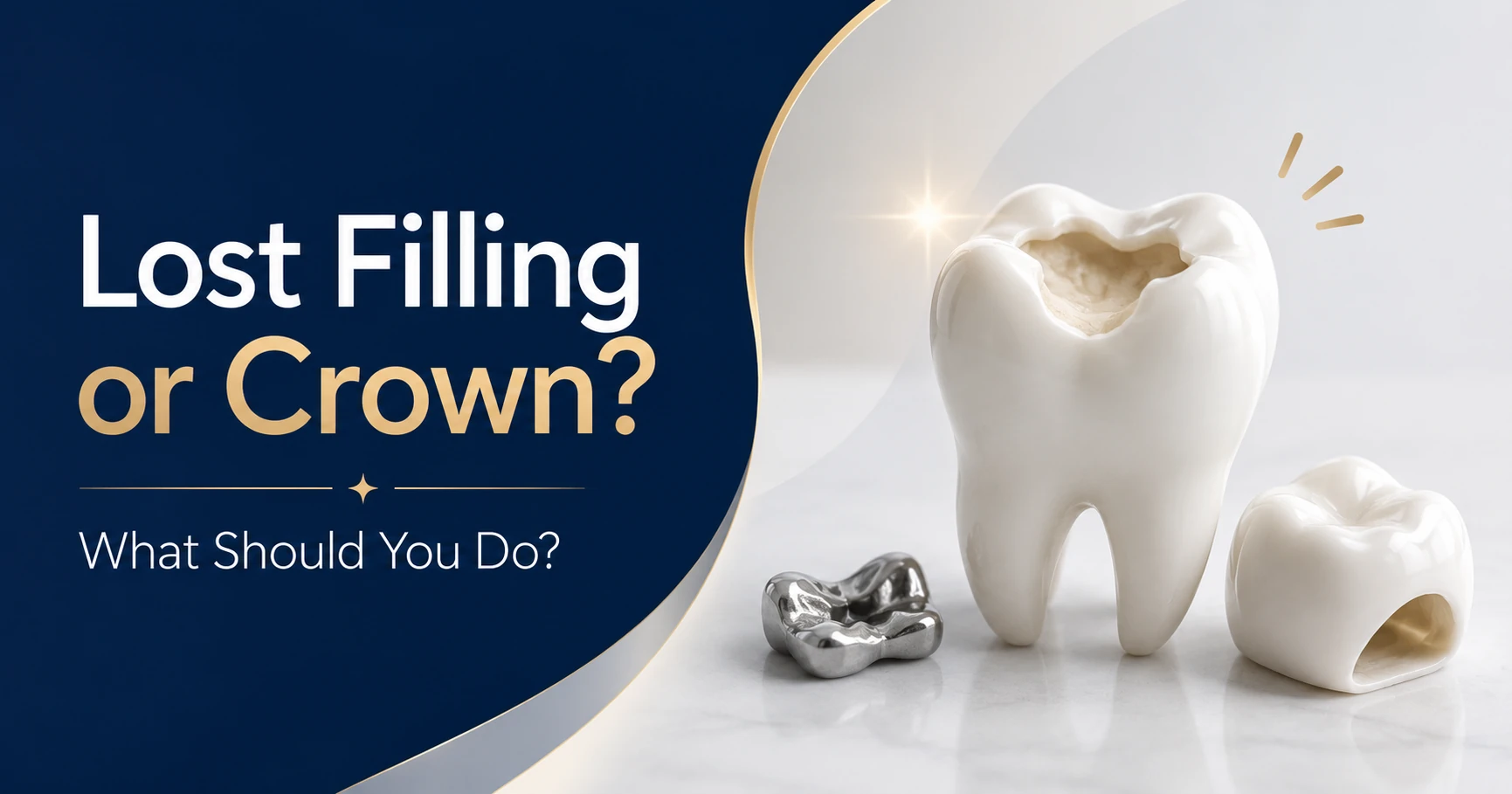
If a filling falls out or a dental crown comes off, keep the area clean, avoid chewing on the affected tooth and arrange a dental assessment. If you have the crown, keep it somewhere safe and take it with you to your appointment.
A lost filling or crown does not always cause severe pain, but it should not be ignored. The tooth underneath may be sensitive or damaged, and only a dental examination can determine whether you need a simple repair, a replacement restoration or further treatment.
If you have severe or persistent pain, increasing swelling or other concerning symptoms, seek urgent dental advice.
What Should You Do Immediately After Losing a Filling or Crown?
The first few steps are similar whether you have lost a filling or a crown.
NHS 111 Wales advises people with a lost filling or crown to see a dentist, keep a lost crown safe, continue cleaning their teeth and avoid hard foods on the affected tooth.
Is a Lost Filling or Crown a Dental Emergency?
A lost filling or crown is not usually a life-threatening medical emergency, but it can require urgent dental care.
How quickly you need treatment will depend on your symptoms and the condition of the tooth.
Seek urgent dental advice if you have:
- Severe tooth or mouth pain
- Pain that is interfering with sleep or normal daily activities
- Persistent pain that is not going away
- Increasing swelling in the mouth or face
- Signs that the tooth has also cracked or broken
- A filling or crown that is loose and at risk of coming off
- Significant sensitivity or pain when biting
What to Do If a Filling Falls Out
When a tooth filling falls out, part of the tooth that was previously covered by the restoration may become exposed.
- Arrange a dental assessment: Even if the filling fell out without pain, contact your dentist. A dentist needs to establish whether the filling simply failed or whether there is another problem, such as decay or a fracture of the tooth.
- Keep the tooth clean: Continue brushing twice daily with fluoride toothpaste, taking care around the affected tooth. Keeping the area clean helps reduce food and plaque accumulation while you wait for treatment.
- Avoid chewing hard foods on the affected side: Try to use the other side of your mouth, particularly when eating harder foods. The remaining tooth may already have lost some structural support, so it is sensible to avoid unnecessary pressure until it has been assessed.
- Manage sensitivity: If the exposed tooth reacts to very hot or cold food or drinks, avoid those triggers where possible.
What to Do If a Dental Crown Falls Out
A dental crown, sometimes called a cap, covers and protects a prepared tooth.
If your crown comes off:
- Keep the crown
Do not throw it away. Place it somewhere clean and secure and take it to your dental appointment. Your dentist will examine the crown and the underlying tooth before deciding what treatment is suitable.
- Do not force the crown back onto the tooth
A crown that no longer seats properly may have come off because the tooth, crown or material underneath has changed. Trying to force it into position could cause discomfort or make it difficult to tell whether the crown still fits correctly.
If you are considering an over-the-counter dental repair product, ask a dentist or pharmacist whether it is appropriate and follow the product instructions.
Do not use household glue or other products that are not designed for use inside the mouth.
Protect the tooth underneath
Avoid biting directly on the exposed tooth and keep it clean. A tooth that has been prepared for a crown can sometimes feel more sensitive once the crown is no longer covering it.
What If My Filling or Crown Fell Out but There Is No Pain?
A filling or crown falling out without pain does not mean the tooth should be left untreated. Dental decay, fractures, or other problems can sometimes develop without causing immediate symptoms, and the NHS notes that tooth decay may not cause symptoms at first.
Even if the tooth feels normal, you can eat comfortably, and there is no sensitivity, it is still best to arrange a dental assessment. If a crown has come off, keep it somewhere safe and take it to your appointment, as your dentist will need to check both the crown and the tooth underneath.
Until you are seen, keep the area clean and avoid chewing heavily on the affected tooth. Pain can be an important warning sign, but its absence does not confirm that the tooth is healthy or that treatment can safely be delayed.
What If Part of the Tooth Came Out With the Crown?
Look at the crown, but do not try to remove anything attached to it.
If you can see what appears to be part of your natural tooth inside the crown, keep everything together and contact a dentist promptly.
Do not attempt to force the crown back into place.
A dentist will need to determine whether:
- only the crown has come loose
- part of the tooth has fractured
- a filling or core underneath the crown has broken
- deeper treatment is required
If a tooth has also broken, treatment depends on how much tooth structure remains and whether the nerve inside the tooth has been affected.
Lost a Filling or Crown in Didsbury or Manchester?
If your filling has fallen out, your crown has come off or the tooth underneath is painful, the team at R&G Dental can assess the problem and explain the appropriate treatment options.
Our emergency dentist in Didsbury service provides same-day emergency appointments where availability allows for patients with problems including lost fillings, damaged crowns, toothache, swelling and broken teeth.
You may also find these pages helpful:
- Dental fillings in Didsbury
- Dental crowns in Didsbury
- Severe toothache: when should you see an emergency dentist?
- What to do if you knock out a tooth
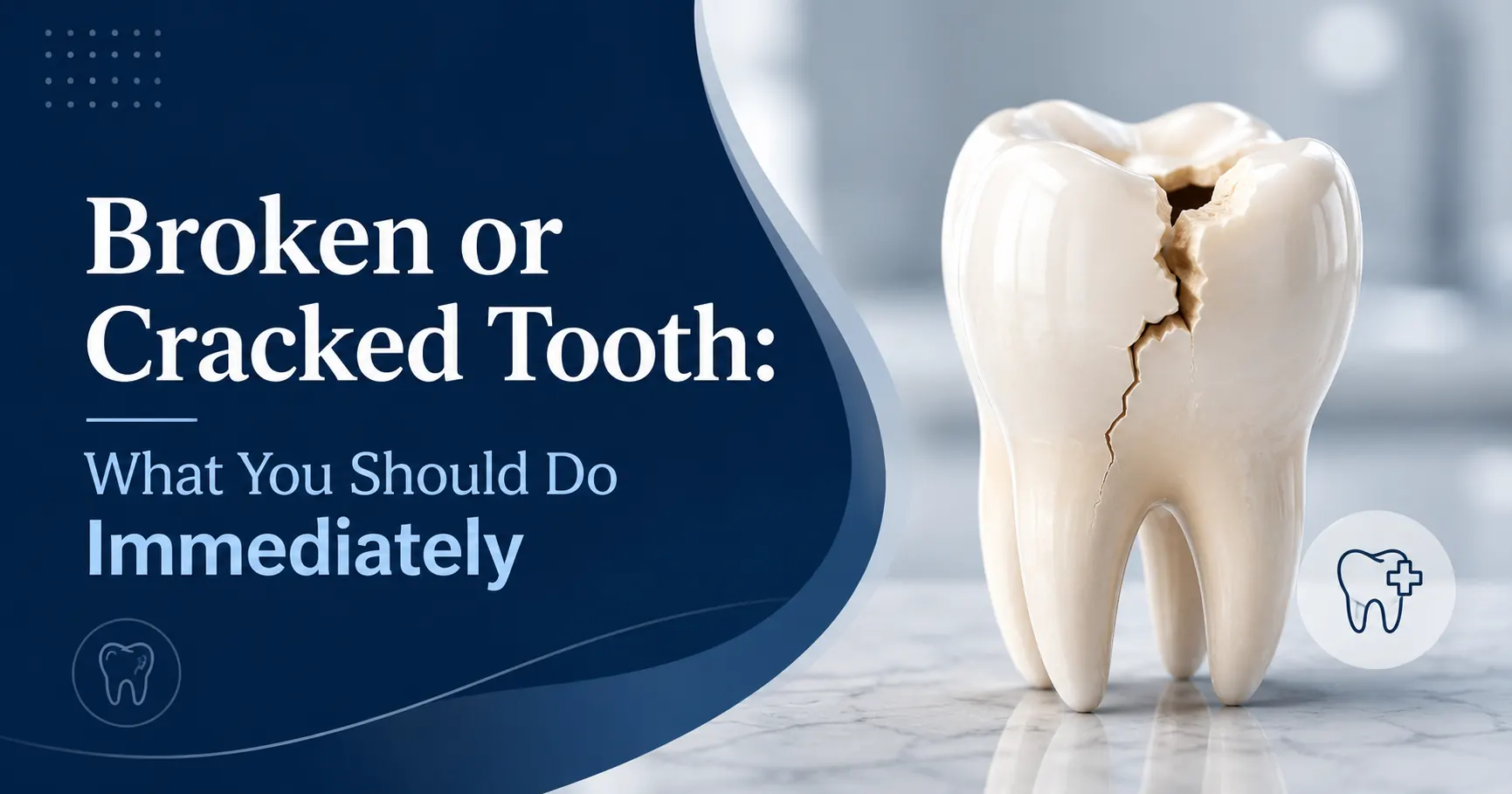
- Broken or Cracked Tooth: What You Should Do Immediately.
Frequently Asked Questions
How long can I leave a tooth without its crown?
There is no universal safe waiting period because the condition of the tooth underneath can vary. A missing crown may leave a prepared or weakened tooth less protected, so contact your dentist rather than waiting for pain to develop. The Cleveland Clinic recommends seeing a dentist as soon as possible after a crown becomes broken or dislodged.
Can I put my crown back on myself?
Do not force a crown back onto the tooth or use household glue. If the crown fits easily, an over-the-counter dental cement may sometimes be used temporarily, but it does not replace professional treatment.
Why is my tooth sensitive after a filling or crown falls out?
A lost restoration can leave previously protected tooth tissue exposed, making the tooth more sensitive to cold, heat, sweets or pressure. Sensitivity can also have other causes, including decay, cracks or worn restorations.
How long can you leave a lost filling or crown?
There is no single safe number of days because the urgency depends on the amount of tooth exposed, pain, sensitivity, decay and whether the tooth has fractured. It is better to contact a dentist when the restoration comes out rather than waiting for symptoms.
What should you avoid after losing a filling or crown?
Avoid chewing hard foods on the affected tooth, repeatedly testing it by biting, forcing a crown into place or using household adhesives such as superglue. Temporary dental products should also not be treated as permanent repairs.
Key Takeaways
- A lost filling or crown should be assessed by a dentist, even when it does not hurt.
- If a crown comes off, keep it and take it to your appointment.
- Keep the affected tooth clean and avoid chewing hard foods on it.
- Avoid foods or drinks that trigger sensitivity.
- Do not force a crown back into place.
- Do not use household glue or other products that are not designed for use inside the mouth.
- Significant pain, increasing swelling or other concerning symptoms may require urgent dental care.
- Heavy uncontrolled bleeding, serious facial trauma or severe swelling affecting breathing requires emergency medical help.